The people your church is called to reach are spending hours every week online. They are scrolling, searching, learning, asking questions, forming opinions, and looking for connection. That reality creates an enormous opportunity for the Church.
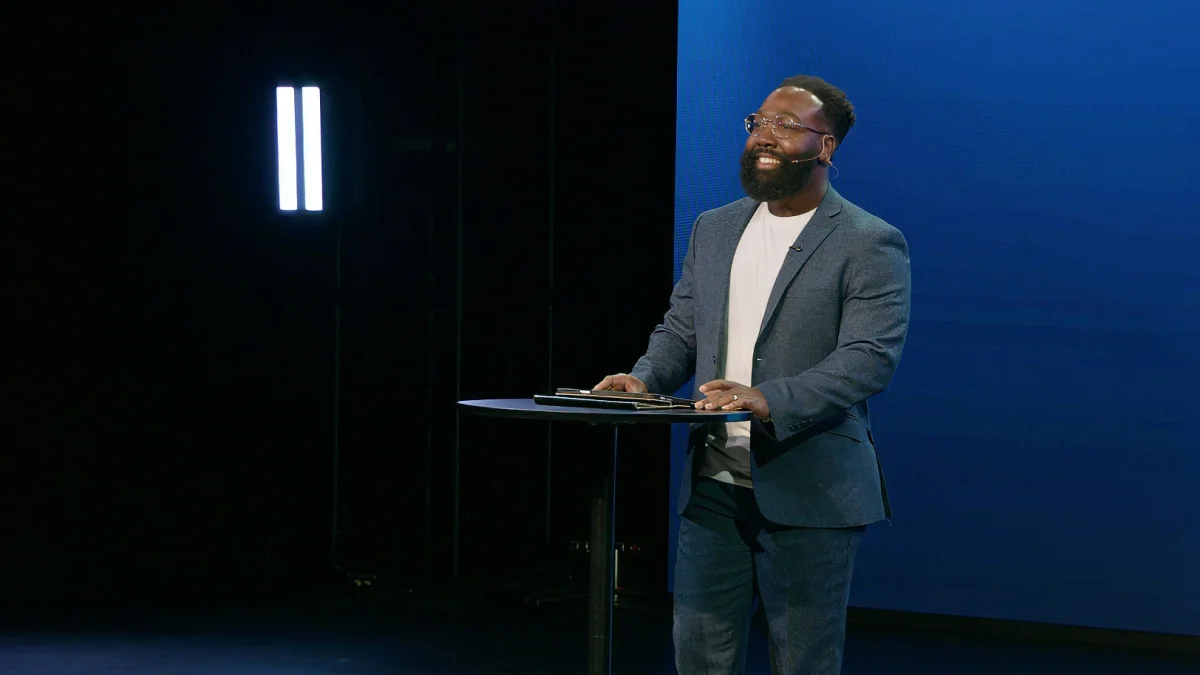
At the Fall 2026 Healthy Church Summit, Mark Lebrun challenged church leaders to think differently about digital ministry. His keynote, Beyond the Church Walls: How Leaders Can Multiply Their Influence in a Digital World, focused on how churches and ministry leaders can use digital platforms to reach people, build trust, enter meaningful conversations, and create pathways toward real relationships and discipleship.
Rather than treating social media as one more place to promote church announcements, Mark encouraged leaders to see the digital world as a place where ministry can actually happen.
Meet Mark Lebrun
Mark Lebrun is a digital strategist, ministry consultant, speaker, and ministry leader who has spent more than 15 years helping people discover their God-given identity and helping leaders communicate the gospel in an increasingly digital culture.
He is the Co-Founder of Vantage Point Agency and the founder of Digital Influencer Co., where he helps founders, brands, and nonprofits turn their voice into authority. Mark has also built a digital community of more than 350,000 people across social media and has worked alongside leaders and organizations including David Kinnaman, Barna Group, Alpha USA, Exponential, and YouTube.
His work sits at the intersection of ministry, media, and digital strategy, but the conviction behind it is simple: the gospel was never meant to stay inside the church.
Social Media Is More Than a Platform
Mark opened his keynote with a question: What if God has already given the Church access to billions of people and we have simply been calling it social media?
For Mark, the shift happened during the COVID-19 pandemic. As so much of life moved online, he began using TikTok to share biblical wisdom and practical encouragement. Within months, his audience had grown dramatically, but the numbers themselves were not what kept him going. What mattered was hearing from people who were actually being helped by the content.
That experience shaped one of the central ideas of his message:
Social media is a mission field.
Mark challenged leaders to stop thinking about digital platforms only as promotional channels. People are already there looking for answers, connection, encouragement, and direction. If that is where people are spending their time, the Church should be thinking seriously about how to meet them there.
That changes the question from, “What should we post today?” to something much more meaningful:
Who are we helping because we showed up online today?
1. Lead With Boldness, Not Outrage
One of Mark’s first practical challenges was for church leaders to lead with boldness online.
But he was careful to define what he meant.
The digital world often rewards controversy. Outrage gets clicks. Negativity gets engagement. Strong reactions can generate attention very quickly.
But attention and influence are not the same thing.
Mark warned that just because something performs well online does not mean it represents Jesus well. Instead, he described biblical boldness as having the courage to speak truth with both conviction and love.
That distinction matters for churches trying to reach people online. The goal is not simply to be louder than everyone else. It is to bring a distinctly gospel-centered voice into conversations that matter.
Digital ministry should not require churches to become combative, sensational, or constantly reactive. It should help them communicate with courage, clarity, compassion, and confidence in the message they have been given.
2. Join the Conversations People Are Already Having
Churches often create digital content around what is already happening inside the church.
There is certainly a place for promoting events, sharing sermon clips, posting service times, and celebrating what God is doing in the congregation. But Mark encouraged church leaders to think beyond content that primarily speaks to people who are already connected.
Instead, he challenged churches to listen to the conversations happening in the wider culture.
What are people worried about? What are they searching for? What questions are shaping their decisions? Where are they experiencing fear, confusion, loneliness, or uncertainty?
Mark encouraged church leaders to create content that enters those conversations and offers a gospel perspective.
That approach requires listening before posting. It means paying attention to the questions people are already asking and considering how biblical truth can speak meaningfully into those questions.
Digital ministry becomes more effective when churches stop creating content simply because they need something to post and begin creating content because there is someone they genuinely want to help.
3. See People, Not Metrics
Digital platforms make it easy to measure almost everything.
Views. Likes. Followers. Shares. Comments. Reach.
Those numbers can be helpful, but Mark cautioned against allowing metrics to become the primary definition of success.
Behind every number is a person.
Mark shared the story of a woman named Melissa who had followed his online ministry for years. After she commented about walking through the death of her father, a digital interaction became an opportunity for personal ministry, prayer, and pastoral care.
That story illustrates one of the biggest opportunities churches have online. A social media post can begin a relationship, but it should not necessarily be the end of one.
A healthy digital ministry should help move people from content toward connection.
As Mark explained, eventually people need more than another post. They need people who know their name, pray for them, challenge them, celebrate with them, and walk with them through real life.
4. Digital Ministry Should Lead Toward Discipleship
The goal of digital ministry is not simply to build a larger audience.
Mark challenged churches to think about how digital engagement can lead people toward community, relationships, and discipleship.
He described a healthy digital expression of the Church as both evangelistic and pastoral. It can be evangelistic because people online are searching for hope, truth, answers, and belonging. At the same time, it can be pastoral because those same people are navigating real struggles and need more than information.
That means churches should think beyond reach.
A post might introduce someone to your church. A video might answer a question they have been afraid to ask. A message might lead to a conversation. A conversation might lead to community. And community can become the beginning of discipleship.
Digital tools can help start those connections, but relationships still need to remain at the center.
5. Start With Your Mission, Not the Platform
With so many social platforms and emerging technologies available, church leaders can easily feel pressure to be everywhere.
During the Q&A following his keynote, Mark offered a helpful starting point: begin with your church’s vision and mission.
Before asking which platform your church should use, ask who your church is trying to reach and why you are trying to reach them. Once that is clear, it becomes much easier to think strategically about how digital tools can support that mission.
The goal is not to chase every new platform or trend.
The goal is to use the right tools to help your church accomplish the mission God has already given you.
6. Be Present, Not Perfect
Perhaps one of the most encouraging parts of Mark’s message came at the end of the session.
For church leaders who feel intimidated by digital ministry, his encouragement was simple: don’t be afraid to use your voice.
You do not need to perform perfectly online. You do not need a massive audience. And you do not need to imitate someone else’s style.
You simply need to be willing to show up and serve the people God has placed within your reach.
As Mark put it during the Q&A, digital ministry is “not really about performance. It’s really about being present.”
Your church may never have hundreds of thousands of followers. That is not the point.
The opportunity is to faithfully use the influence you do have to encourage someone, answer a question, offer hope, start a relationship, or help someone take another step toward Jesus.
Watch Mark Lebrun’s Full Healthy Church Summit Session
These takeaways only capture part of Mark Lebrun’s keynote.
In the full session, Mark shares more of his own digital ministry journey, explains how churches can enter cultural conversations with a gospel perspective, explores the connection between digital outreach and discipleship, and answers practical questions about choosing digital platforms and making online ministry feel more relational.
You can watch Beyond the Church Walls: How Leaders Can Multiply Their Influence in a Digital World along with the rest of the Healthy Church Summit sessions on demand for free.
The digital world is already shaping the people our churches are called to reach. The question is not simply whether churches should be online. It is how we can show up there intentionally, faithfully, and relationally.
